
Why Your Child’s Face Gets Red After Crying — The Tear Line Pattern in Eczema (And How to Prevent It)
May 15, 2026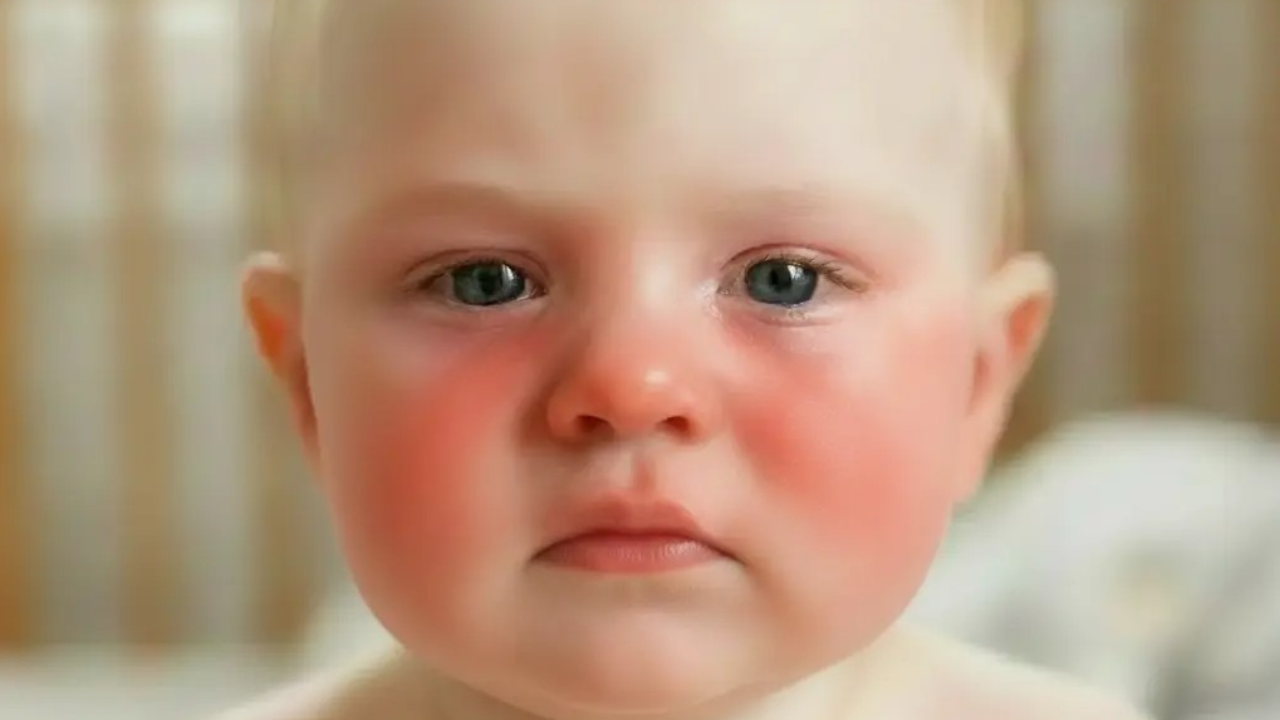
The Red Tear Line Pattern on Eczema-Prone Skin
If you’ve ever noticed a red line forming from your child’s eye down their cheek after crying, you’re not alone.
It can look alarming — almost like eczema suddenly spreading across their face.
But what you’re seeing is actually a very specific and common pattern — a surface-level irritation caused by tears interacting with already sensitive skin.
Sometimes called the “red tear line”, this happens when tears repeatedly travel across sensitive skin — especially in children with eczema or recently irritated skin.
The good news?
Once you understand what’s happening, it becomes very predictable — and very preventable.
Why Does My Child’s Face Get Red After Crying?
Because tears contain salts and enzymes that can irritate sensitive skin, especially in children with eczema. As tears run down the same path, they create a visible red line — often made worse by wiping or friction.
A Tear-Induced Irritation Pattern (Not a Full Eczema Flare)
What’s happening here is something I’ve seen over and over again, and once you notice it, you start to recognize the pattern instantly.
It’s not a full flare.
It’s not an allergy.
It’s not a new condition.
It’s a tear-induced irritation pattern on already sensitive skin.
And it almost always shows up in the same way:
- a line tracing down from the inner corner of the eye
- sometimes a second line falling straight down from the center of the lower eyelid — what many parents describe as a “clown face” pattern
- redness that follows the exact path of the tears
- skin that looks suddenly inflamed, even if it was calm just minutes before
The reason it feels so alarming is because of how precise it looks — like something is actively spreading. But in reality, it’s a surface-level reaction happening along a very predictable route.
Why Tears Can Irritate Eczema-Prone Skin
We tend to think of tears as harmless — just water, right?
But they’re not just water — on sensitive skin, they behave differently.
Tears contain:
- small amounts of salt
- enzymes
- proteins
On healthy skin, none of this matters.
But when the skin barrier is compromised — even slightly — those same components can trigger irritation, especially in areas where the skin is thinner and more reactive.
Why It Always Looks Like a “Line”
One of the most confusing parts is how consistent the pattern is.
It’s rarely diffuse. It doesn’t show up randomly.
It follows a path.
That’s because tears don’t move unpredictably. They follow gravity, and more importantly, they follow the same path every time — from the inner eye, down across the cheek.
So what you’re seeing isn’t eczema spreading across the face.
It’s repeated exposure along a single line. And once you see it, you’ll start to recognize it immediately.
The Hidden Trigger: Wiping
If there’s one thing that quietly makes this pattern more intense, it’s not the tears themselves — it’s what we do next.
We wipe.
Of course we do. It’s instinct.
But wiping — especially downward wiping — introduces friction to skin that is already sensitive.
And when you combine:
- tear exposure
- thin skin (under the eyes)
- repeated wiping
you get a kind of compounding effect where the skin becomes more irritated than it would have from tears alone.
This is why some parents notice:
“The more I try to clean it, the worse it looks.”
That’s not your imagination. That’s friction.
Why You See It Under the Eyes, on the Cheeks, and Sometimes the Neck
This pattern tends to show up in the same areas for a reason.
Under the eyes is some of the thinnest skin on the body, so it reacts quickly.
The upper cheeks are where tears naturally travel and where wiping tends to happen.
And if the skin is already a little reactive, that irritation can visually extend outward — sometimes toward the sides of the face or even the upper neck.
It can look like multiple areas are flaring at once.
But it’s usually one pattern expressing itself across connected, sensitive zones.
What This Is Not
Understanding what this isn’t is just as important:
- Not an allergic reaction
- Not a sudden eczema flare
- Not an infection
- Not something spreading uncontrollably
It’s a localized irritation pattern on sensitive skin
How to Treat Red Tear Lines
Once you understand that this is about exposure and friction, the approach becomes much simpler — and often much lighter than most people expect.
During crying, the goal isn’t to keep the face perfectly dry.
It’s to reduce friction.
During Crying: Absorb, Don’t Wipe
Instead of wiping tears away:
- gently press a soft cloth or tissue
- let it absorb moisture
- avoid dragging across the skin
After Crying: Reset the Skin
- use a damp cloth (lukewarm water)
- press and lift gently
- pat dry
No scrubbing. No repeated passes.
Let the Skin Settle
Resist the urge to immediately apply products.
In many cases, giving the skin a short window to calm down naturally prevents further irritation.
The One Preventive Step That Changes Everything
There’s one small shift that, in my experience, makes the biggest difference — and most parents aren’t told this early enough.
Before situations where you know your child might cry — transitions, fatigue, overstimulation, doctor visits — applying a very thin protective layer can make a noticeable difference.
Something as simple as a tiny amount of Vaseline, lightly dabbed under the eyes and across the upper cheeks, can act as a buffer.
Not a thick layer. Not something visible or greasy.
Just enough to create separation between the skin and whatever touches it.
So when tears come, they don’t sit directly on compromised skin.
And that alone can prevent the entire “tear line” from forming.
Why This Happens More During Certain Phases
If you’re noticing this more lately, it’s not random.
It tends to show up when the skin is already in a more sensitive state — after a flare, after trying new products, during travel, or when routines have shifted.
In those moments, the skin doesn’t need a major trigger.
It just needs a small one, repeated in the same place.
And tears, by their nature, do exactly that.
Understanding the Pattern Changes Everything
What looks like eczema spreading is often something much more contained.
It’s not the condition worsening in real time.
It’s the skin reacting along a predictable path.
Once you see it that way, it becomes easier to respond without overcorrecting — and easier to prevent the next time it happens.
Because the goal isn’t to stop your child from crying.
It’s simply to protect the skin while they do.
Quick Summary: What to Do When You See a Red Tear Line
- Gently dab tears — don’t wipe across the skin
- Use a lukewarm damp cloth to remove residue
- Let the skin settle before applying products
- Avoid repeated wiping (this causes more irritation than tears)
- Use a very thin barrier (like Vaseline) before situations where crying is likely